Shopping Cart


Therapeutic indications
Therapeutic indications
Symptomatic relief of pain and fever.
Dosage and Administration
For oral administration.
Do not use in children under 12 years.
Method of administration:
Nurofen 400 Fasttabs: Take 1 tablet with a half glass of water.
Dosage:
Nurofen 400 Fasttabs:
- Starting dose: 1 film-coated tablet.
- If necessary, 1 film-coated tablet every 4 to 6 hours, with a maximum of 1 per dose and 3 day.
Elderly: There is no need to adjust the dosage.
In patients sensitive stomach, it is advised to take Nurofen during a meal.
If symptoms persist or worsen in a short-term use, he advised patients to consult a doctor.
Contra-indications
Patients with known hypersensitivity to ibuprofen or other ingredients of the product.
Patients with a history of bronchospasm, asthma, rhinitis or urticaria associated with the use of aspirin or other NSAIDs.
Patients with a history or presence of ulcer or gastro-intestinal ulceration or bleeding gastro-intestinal.
Patients with severe hepatic impairment, severe renal impairment or severe heart failure uncontrolled.
During the last trimester of pregnancy (see also section: "Pregnancy and lactation").
Special warnings and precautions for use
Caution is recommended in the following cases:
- Lupus erythematosus and other connective similar (see Section: "Adverse Effects")
- Gastrointestinal disorders and inflammatory bowel diseases (ulcerative colitis, Crohn's disease)
- Hypertension and / or heart failure
- Renal
- Hepatic
Bronchospasm can be triggered in patients suffering or having a history of asthma or allergic disease.
The risks of adverse reactions is increased among the elderly.
Side effects can be minimized if we use the lowest effective dose for the shortest period possible.
In case of prolonged use of large doses of painkillers in an indication other than those listed in the leaflet, headaches may occur, it should not be treated by increasing the dose.
In general, chronic use of analgesics, and, in particular, associations of several painkillers, can cause lasting kidney damage can lead to renal failure (analgesic nephropathy).
Interactions with other medicaments and other forms of interaction
Ibuprofen, like other NSAIDs, must be used with caution when it is associated with:
- Acetylsalicylic acid or other NSAIDs and glucocorticoids. These substances can increase the risk of adverse gastrointestinal events.
- Antihypertensives and diuretics since NSAIDs may diminish the effect of these drugs.
- Anticoagulants. No significant interference with oral anticoagulants has been reported with daily doses up to 2400 mg of ibuprofen. However, because the anticoagulant effect of NSAIDs, the risk of bleeding is increased.
- Li. There are indications of a possible increase in plasma levels of lithium.
- Methotrexate. There are indications of a possible increase in plasma levels of methotrexate.
- Zidovudine. There are indications of an increased risk of hemarthrosis and hematoma in hemophilic patients HIV (+) receiving concurrent treatment with zidovudine and ibuprofen.
Pregnancy and lactation
The experience of pregnancy for safety of use of ibuprofen in humans is inadequate. As the consequences of inhibition of prostaglandin synthesis are not fully known, it is recommended to avoid using ibuprofen during the first 6 months of pregnancy.
This medication is cons-indicated during the last trimester of pregnancy. By its mode of action, it may cause inhibition of uterine contractions, premature closure of the ductus arteriosus and pulmonary hypertension in the newborn, an increased risk of bleeding in the mother and child and increased risk of edema in the mother.
Ibuprofen and its metabolites may pass, at very low concentrations in breast milk. No adverse effects seen in newborns and it is not necessary to interrupt breastfeeding if a short-term treatment with the recommended dose for mild to moderate pain and fever . In this case, it is recommended that Nurofen just after feeding.
Effects on ability to drive and use machines
No special precautions are necessary when using short duration of Nurofen.
Adverse Effects
The list of side effects listed below for the effects observed in the course of a short-term treatment with ibuprofen for mild to moderate pain and fever. In other indications and in cases of long-term treatment, other side effects may occur.
Gastrointestinal
Uncommon:
- GI symptoms such as dyspepsia, stomach pain, nausea.
Rare:
- Diarrhea, flatulence, constipation and vomiting.
Very rare:
- Gastro-intestinal ulcers, sometimes with bleeding and perforation.
Central nervous system
Uncommon:
- Headache.
Kidney
Very rare:
- Decreased excretion of urea and formation of edema. Acute renal failure may also occur. Papillary necrosis especially in prolonged treatment and increased serum urea have been reported.
Liver
Very rare:
- Liver problems, especially if long-term treatment.
Blood
Very rare:
- Disorders of hematopoiesis (anemia, leukopenia, thrombocytopenia, pancytopenia, agranulocytosis). Early signs are fever, sore throat, superficial mouth ulcers, flu-like symptoms, fatigue, nasal bleeding and bleeding skin.
Skin
Very rare:
- The serious skin reactions such as erythema multiforme, may occur.
Immune System
Very rare:
- During treatment with ibuprofen in patients suffering from autoimmune diseases (lupus erythematosus, mixed connective), isolated cases of aseptic meningitis symptoms such as neck stiffness, headache, nausea, vomiting, fever and disorientation, are reported.
Hypersensitivity reactions
Uncommon:
- Hypersensitivity reactions with urticaria and pruritus.
Very rare:
- Severe hypersensitivity reactions. Symptoms may include: swelling of face, tongue and larynx, dyspnea, tachycardia, hypotension or severe shock.
- Exacerbation of asthma.
Overdose
a) Symptoms of overdose
Symptoms of overdose include nausea, vomiting, stomach pain, headache, dizziness, lethargy, nystagmus, blurred vision, tinnitus and, rarely, hypotension, metabolic acidosis, renal failure, convulsions and unconsciousness.
b) Therapeutic Measures in case of overdose
There is no specific antidote. Patients should receive symptomatic treatment. Use supportive care if necessary. During the hour after taking amounts above 400 mg / kg may be given activated charcoal or lavage stomach followed by administration of activated charcoal.
PHARMACOLOGICAL PROPERTIES
Pharmacodynamic Properties
The lysinate ibuprofen (a salt of ibuprofen) has analgesic, antipyretic and anti-inflammatory. The analgesic dose is 200 to 400 mg per dose, with a maximum of 1.2 g per day. The anti-inflammatory doses appear with higher doses analgesic / antipyretic.
It is a compound that belongs to the class of derivatives of propionic acid.
Ibuprofen is an anti-inflammatory drug (NSAID) whose effectiveness in inhibiting the synthesis of prostaglandins (cyclooxygenase) has been demonstrated using models of experimental anti-inflammatory standard in the animal. Therefore, ibuprofen reduces inflammatory pain, swelling and fever; again, ibuprofen reversibly inhibits platelet aggregation.
Ibuprofen has been studied in connection with dental pain after surgery, sore throat and abdominal cramps accompanying primary dysmenorrhea. These models are generally accepted standard for evaluation of analgesics for the treatment of acute pain mild to moderate. These studies have shown that a dose of 200 to 400 mg of ibuprofen is effective against acute pain. Ibuprofen is also active in patients suffering from pain and fever caused by flu or a cold, and in case of headache, muscle aches or bruises and back pain.
Nurofen 400 Fasttabs is generally well tolerated.
Pharmacokinetic Properties
When using a therapeutic dose, ibuprofen pharmacokinetics are linear, and it is not changed significantly in children, adults or seniors.
The bioavailability is not influenced by concomitant ibuprofen with food, if taken after meals, the maximum serum concentration is reached more slowly and lower. However, this has no influence on the quantity of the product completely absorbed.
Ibuprofen lysine is absorbed rapidly so that the peak serum concentration is reached after about 25 to 30 minutes, this being faster than ibuprofen, which reaches the maximum after 1:30. The lysinate ibuprofen relief more quickly.
Ibuprofen binds to 99% to plasma proteins, but, given its binding site, this does not affect interactions; duration half-life of 2 hours.
Under identical conditions, the plasma concentration increases with the amount of drug absorbed. The peak concentration of synovial reached 2 hours after dosing, remains 5 to 6 hours and after 12 hours, it is higher than the plasma concentration.
The synovial maximum concentration is about one third of the maximum serum concentration. Ibuprofen is in a largely metabolized in the liver to a derivative hydroxylated and carboxylated inactive.
The rapid elimination of ibuprofen is mainly (over 90%) via urine, and is virtually complete within 24 hours, so there is no accumulation. This removal is done for 10% unchanged form and 90% form two inactive metabolites.
Preclinical safety data
The toxicity of ibuprofen observed in experiments in animals consisted of lesions and peptic ulcers. Ibuprofen has shown no mutagenic potential in vitro, and no carcinogenic effect in rats and mice. Experimental studies have shown that ibuprofen crosses the placental barrier, but there is no evidence of teratogenicity.
PHARMACEUTICAL
List of excipients
Povidone, sodium starch A, magnesium stearate, hypromellose, talc, Opaspray White M-1-7111B (hypromellose, titanium dioxide E171), black Opacode S-1-8152HV (iron oxide E172, shellac, soya lecithin, antifoam DC 1510) or black ink (iron oxide E172, shellac, propylene glycol).
Incompatibilities
No
Shelf Life
3 years.
Precautions for storage
Do not store at temperatures not exceeding 25 ° C.
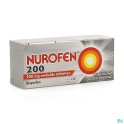
What Nurofen 400 Fastcaps contains.
The active ingredient is 400 mg ibuprofen per capsule.
The other ingredients are: polyethylene glycol 600, potassium hydroxide, gelatin, sorbitol, purified water, Ponceau 4R (E 124) and printing ink. See section 2 "Nurofen 200 Fastcaps contains sorbitol and Ponceau 4R (E124)".
This is a medecine available without a prescription.. Do not use long without medical advice. Read the instructions carefully. Keep this medicine out of the reach of children. Keep the manual as it contains important information. Ask for advice from your doctor or pharmacist. Consult your doctor if adverse reactions.
'